Wednesday, 7 September 2016

I Survived a Zombie Holocaust - review

2014 (New Zealand)


Contains mild spoilers.

After recently lampooning Cooties for offering little to an ever increasingly crowded genre, I feel a little two faced liking director and writer Guy Pigden's equally crowd pleasing zom-rom-com as much as I did. Just as farcical, slap-stick, easy to watch and dare I say whimsical, on the surface there's little, save Cootie's bigger budget and recognisable stars, to be able to call one out. Though perhaps, there's the rub; Cootie's was a deliberate cash-in; a contrived commercial venture that ticked all the right boxes because someone literally had a list of boxes that needed to be ticked. I Survived a Zombie Holocaust, in future referred to as I Survived, feels like it ticked the boxes naturally; purely by virtue of having a well-conceived and relatively simple script and vision, and the ability and enthusiasm of actors and a production crew to see it through. Nothing is forced and while the jokes, for the genre, are just as obvious and the farce tinted homage plays out just as predictably, there's a delightful authenticity and self-awareness, and you feel more you're invited in, than cajoled along.

I Survived is what I've started to refer to as a post-zombie zombie film. What I mean by that, is there's no pretence that zombies aren't a known thing, that The Walking Dead phenomenon didn't happened, and even the remotest of New Guinea tribesmen don't know the best way to deal with a shuffling corpse is a spear through the head. For most zombie films this doesn't equate to reduction in tension or build up; but rather a getting to straight to it, once anticipation makes way for survival, saving us all from ten minutes of rather awkward and contrived action re-establishing all the ground rules. Not only does I Survive wear this post-zombie t-shirt, but it's ballsy, or confident enough to actually try and go one step further. You see, there's no pretence; not only is their world our world; their zombie reality and heritage our zombie reality and heritage, but the film relies on all this for the narrative to make any sense at all. 

Wesley Pennington (Harley Neville), fresh from film school, has arrived on set as a junior runner for the zombie b-movie 'Tonight They Come'. Quickly brought into line as the shoot's dogsbody; he's also unwittingly one of the first to realise that parallel to the watered down zombie schlock being filmed, there's a very real undead threat, literally just around the corner. It's a fun, intelligenty thought out and original premise which serves to simultaneously give licence for shots at both b-movie films and b-movie film makers. SMP (Andrew Laing) the director cum dictator of Tonight They Come leads the rather formulaic and exaggerated production crew, with a sociopathic zeal through forty odd minutes of surprisingly entertaining and witty parody until zombies meet zombie extras and it's every bit all the running, screaming, carnage and death we've come to love.

Setting itself up the way it does, I Survived is almost a self-aware parody of a post-zombie film, and probably now I'm thinking about it, a hard film to pull off without coming across derogatory and insulting. I'm probably over complicating it all, save to say, I Survived isn't demeaning or dumbed down, and that's the point. It's clearly the work of people who get it; people who love the genre and have something genuine and original to say. Zombie rom-coms, are a great phenomenon but dangerously close to over-saturation, but Pigden et al. know it; and as said, it's this self-awareness that, elevates it from the crowd. Even though I Survived is every bit a a member of the genre and guilty in huge respects of all the things its parodying, it somehow works precisely because it itself is in on the joke. It's refreshing, honest and playful yet respectful; it's the comedian that gets away with all the offensive material because first and foremost he's the butt of every joke.

I've also seen comparisons made with Peter Jackson's eighties over-the-top slaughterfest Dead Alive (Braindead); what with Wesley's demeanour similar to Lionel's, the copious gore, and the same New Zealand badge of honour, but I think it would be doing both a disservice. Jackson's splatter masterpiece was a unique cinematic experience; audaciously stupid and excessive all for the sheer hell of it. Pigden's I Survive forges its own path, and whilst abundant in bad-taste and zombie-excess, it's less about gore-shock and one-liners and more about fitting in coherently with zombie-lore and providing its own subtler narrative. If anything, playing with the post-zombie experience the way it does its closest in style and substance to perhaps Mimesis, but with an added laughter track and a lot more innards.

I Survived a Zombie Holocaust took a risk and in my opinion it paid off. It is yet another modern rom-com but it works precisely because it knows it, and is happy to play along. With some genuinely funny moments, some stupid jokes, a witty, unpredictable script and perfectly pitched performances that played along it ticks all the right boxes for a fun zombie night in. Sure it's not without fault; I'd have preferred it if the real zombie threat had arrived a good ten or twenty minutes earlier, and I'd have liked them to have even pushed the b-movie parody just that little bit harder; but over-all I felt they got it pretty much spot on. Perhaps it also worked for me because unlike for most zom-rom-coms I feel as a hardcore zombie film fan I am this time the target audience; appreciative of the genre call-backs, the clever and satirical side swipes at not just the b-movie film making but b-movie zombie films themselves and the rich and dark humour. I often accuse zom-rom-coms of dumbing down so as to branch out and attract a wider audience and whilst I Survive can't shake this off in its entirety, the fact that it appears to know it, and play with this with such confidence and success is commendable - 7/10.

Steven@WTD.

Friday, 2 September 2016

The Walking Dead Season 5 - review

2014 (USA)


Contains mild spoilers.
  
On reflection perhaps I was a little lenient with Season 4. Sure it was every bit the high-jinx and nigh on pitch perfect post-apocalyptic zombie soap opera we're now completely besotted by. It's just that maybe, it could be accused of being a little light; on occasion a tad drifting and superfluous in its narrative and pacing. The heavily orchestrated design, to maximise each half-season's grand pay-off, also maybe relied a tad too much on non-substantive filler to both contrast and build up the stakes. I'm not saying it was bad; not by any stretch; it was what it was, and the second half series of single episode self contained stories genuinely offered something new, fascinating and authentically indulgent, but put up against Season 5, I can readily agree in terms of moment to moment substantive content, it perhaps struggles to keep pace.

Season 5 starts with a wake-up explosion of gratuitous and excessive violence. Whether intentioned as a rebuke to any accusation the franchise was in danger of pandering to an ever increasing and more mainstream audience, or not, it certainly acts as a reminder that little Billy shouldn't really be up watching it; which after any cursory glance over social media, we know he is. Scott M. Gimple, now firmly entrenched as the show's main-man presents Rick and the gang's escape from Terminus, the cannibal slaughterhouse, in every bit as sickening, challenging and gruesome a way as he possibly could, with scenes that could slide easily into any Saw or Hostel chapter. It's breathtakingly refreshing and both a reminder, should we need it, that The Walking Dead is horror, with deep zombie roots, and the post-apocalyptic undead world Kirkman painted was really quite depressing, depraved and dangerous, and certainly never held it's punches. It's also an episode that begins the Season's meta-narrative of cascading moral degeneracy as a necessity to survive; of not just losing humanity but finding ways to justify increasingly deplorable acts.

As regards content and pacing, Season 5 is full-on and unremitting. There may be an overarching moral narrative, but Rick and the group's physical day to day journey from cannibal central to eventual restitution and respite in Alexandria, is a full on and desperate battle for survival with new foes, new challenges and death around every corner. The shift in pacing is palpable with some powerful sub-stories that previously may have filled whole half series themselves. Along the way there, new deep, flawed and interesting characters join the fray namely Father Gabriel Stokes (Seth Gilliam) and Noah (Tyler James Williams) and as is the way, others part company, some painfully under-utilised and before their time, but all sadistically and brutally. Once reached, the sanctuary of Alexandria drastically changes the dynamic and offers, as we will see with Season 6, a huge shift in narrative structure and scope. It arrives at the right time for the franchise and injects much needed freshness and not just a whole set of new problems but a fine array of new personalities and dynamics, all sumptuously delivered by a top class array of acting talent.

With Season 5, the ongoing moral conflict that's been at the heart of the walking dead, that of extreme pragmatism and the will to do what must be done in order to survive, versus being good despite everything, and without condition is truly put to the test. But it's never straightforward. The cannibals may symbolically represent the worst of people; a truly detached and perverted inhumanity; but as with all the moral conflict this season, alongside the very real depravity there's always some dark but deeply sad backstory and perhaps some ambiguity with even some sympathy and understanding. The walking dead world has always mandated grey morality and some license to move outside the traditional framework; but here even some of Rick's and the groups most basic and fundamental beliefs are not only challenged but forced into redefinition. A new world order needs a new moral framework; one where murder may even be the 'better' choice, and the very definition of what it even means to be good is fluid. The introduction of a Episcopalian priest and later the rather protected and naive citizens of Alexandria further adds to the incongruence, allowing for some wonderful interplay, as beliefs are challenged, people fall apart and illusions shattered. 

Season 5 is a non-stop barrage of violence, action and blood and has certainly raised the ante when it comes to guts, gore and zombies with moments that Romero, and even Fulci would have been proud. Episode 1 aside, it was two scenes in episode 14, 'Spend' and a nasty full on, Day of the Dead, open gut munch, and a particularly gruesome close quarters face ripping that took the proverbial eye. If you'd have asked me, I'd have said Seasons 1-4 were just as visceral and gory, yet Season 5 just feels more old-school gratuitous, and traditional zombie, where the style and staging of a zombie kill is as important as the narrative impact. It's also like zombies are somehow important again. Seasons 3-4 saw a transition to people providing the main cause for concern, and rightfully so some 600+ days into the new post-apocalyptic calendar, but perhaps the swing was too great with zombies taking too much of a back seat so as to lose some of their menace and threat. With these emphatic and cinematically brutal zombie killings, perhaps Season 5 serves to remind us who the real monster is.

A return to a form I wasn't sure we'd really lost. Perhaps I'm being a tad disingenuous with Season 4; but such is the greatness of 5; such is the pacing, the tight intelligent narrative, the sophistication and nuance of the characters and their development, and such is the audacious, brave and visceral depiction of the post-apocalyptic landscape and its inhabitants, that it really stands out as the pinnacle of what not just The Walking Dead, but the genre, promises - 10/10.

Steven@WTD.

Thursday, 25 August 2016

The Walking Dead Season 4 - review

2013 (USA)


Contains mild spoilers.

By now we know what we're getting. It's The Walking Dead; it's the triumphant pinnacle of post-apocalyptic survival story telling. With brilliant emotional, nuanced and brave writing, confident acting and sumptuous triple A production and presentation it's everything the ardent zombie fan, like myself could hope for. It's also becoming increasingly difficult to differentiate each season from a review position, and perhaps this is why on the cusp of season 7's highly anticipated return I've only just got round to looking at season 4 again. While it may have taken season one and two to establish its identity, now some 51 episodes in, its increasingly difficult to discern or separate episode from episode, never-mind season from season. The Walking Dead is what it is; season 3 was nigh on perfect zombie fun, as is 4, as is, and this is jumping ahead of myself 5 and 6, and no doubt 7 ad infititum if they get their way, will be. Each season is now an iteration of what we all know just works; and as long as the formula is stuck to then what could go wrong?

Maybe with season 4, the Walking Dead formula has never been quite so obviously adhered to. There's the quiet period; the day to day survival and down-time; if dealing with deadly plagues or work-place accidents like having a helicopter crash through the ceiling or having your leg ripped off by a ravenous flesh-eater, can be considered down-time. It's a character driven survival narrative that's thoroughly engaging and beautifully polished, if maybe at times a little meandering and by now a tad rehashed. But it's all really about creating a foundation upon which the various writers, directors and producers can build up tension to a big climatic explosive, and inevitable pay-off. It's brilliant, it works and once invested you can't not see it through. The thing with Season 4 though is it does it twice to meet the demands of a now established mid-season TV break, and for the first time I felt the very deliberate design was, well for want of a better word deliberate, and all a little fabricated. I'm not sure it really detracted from the show and the pay-off in both episodes 8 and 16 was perfectly executed, and some of the best television I've ever watched. It's just I'm just not sure how strict adherence to a formula like this can benefit artistic licence and aesthetics long term, and there's always, as with any long running show the problem where over-adherence to safety, stability and repetition ultimately leads to monotony, predictability, dullness and an audience turning off.

While the focus of the character development and narrative again focuses on the established key personalities of Rick, Carl, Carol, Dwayne, Tyreese (Chad L. Coleman) and Glen and Maggie, Season 4 introduces some much needed fresh faces in the feisty but vulnerable Tara (Alanna Masterson), the subdued Rosita (Christian Serratos) and the instantly appealing double act of Eugene (Josh McDermitt) and Abraham (Michael Cudlitz). As is the way, The Walking Dead isn't afraid to reduce the cast too; though one gets the increasing feeling that the main gang of seven, as mentioned above, are treated with a certain invulnerability able to constantly scrape by, while all those around drop like flies. There seems an ever increasing reliance on new characters, or throwaway one episode wonders, to provide that feeling of hopeless futility, and carry the weight that is the inevitably of death the original cast were entrusted to before. This all being said, the writers aren't scared to do some pretty horrible things with and to, all those involved with some quite harrowing, brave and thought provoking episodes. Moral ambiguity and dissonance has always been a staple of the Walking Dead experience and the theme of at least trying to be good in a world that no longer adheres to any kind of moral rules is still central to the narrative. While Rick's internal journey hasn't quite fully resolved, its Carol this time that's central to the groups moral struggle, adopting Shane's pragmatic position, albeit almost to the point of pathological, to challenge Rick's reaffirmed (though Hershel) belief in a categorical imperative. All this leads to some and highly charged emotional confrontations, intelligent characters development and great drama.

 Despite possibly being easily accused of having an overarching, rather formulaic design; the writers and production team with season 4, demonstrate a greater confidence not being afraid to deviate from the normative linear narrative structure. Both the episodes focused solely on the Governor (David Morrissey), and the sequence of six tight little self-contained moral tales after the mid-season climax while mostly successful, allowed the writers the freedom to play with dynamics that would not have evolved naturally and opened up the characters in ways that were both fascinating and emotional. The Walking Dead season 4 is every bit the same breath-taking, engaging, high-octane modern survival zombie brilliance we've come to both expect and with such a fervent weight of expectation, probably demand. With Robert Kirkman now firmly established as one of the executive producers, even writing two of the episodes, the franchise's future is almost firmly assured, guaranteeing the same uncompromising grit and gore as its comic book inspiration. The benchmark - 9/10.

Steven@WTD.

Wednesday, 17 August 2016

Zeder (Revenge of the Dead) - review

1983 (Italy)


Contains spoilers.

There's (zombie) films to drink beer and shout along with, there's films for screaming, cowering and recoiling from; there's comedies, parodies and musicals, and there's even the odd delight that, at a push, could make it to Netflix and chill. Zeder aka Revenge of the Dead as it was re-titled a few years later for a US home video audience that needed a more noticeable title isn't really any of the above. It's an odd little number; a thinking man's zombie film anomaly, with nuance, sophistication, ambiguity and a dialogue and narrative heavy story. It's also not really like anything else save maybe Dellamorte Dellamore with its surreal dream-like approach to the veil of death; or maybe Pet Sematary with the same penchant for macabre spirituality, subtle, minimalist yet disturbing presentation, and story full of dubious and detached morality.

The story rather plays out like a good H. P. Lovecraft investigative short, with a nefarious well funded organisation / cult and forces and powers they couldn't possibly hope to either understand or control. There's also the innocent and unsuspecting bystanders that become embroiled, ignoring the myriad of warnings to fall truly down the rabbit hole. Here it's writer Stefano (Gabriele Lavia), our films hero, and his discovery of a disturbing but curious letter on an old typewriter ribbon gifted to him by girlfriend Allesandra (Anne Canovas) that sets the wheels in motion, as well as affirming the main narrative thread.

Zeder refers to the late Paolo Zeder; an occultist and hierophant who posited that the world was dotted with ancient places of antiquity and power called k-zones. Forged through great acts of spirituality and death, these hubs act as permanent zero-state zones where binary boundaries like life and death become blurred and insubstantial and thus of great interest to those with the money, curiosity and moral duplicity to exploit. The film begins in one such k-zone, a flashback to 1953 and the unearthing of Zeder by cult member Dr. Meyer (Cesare Barbetti) who uses the psychic prowess of his protégé; the young naïve, innocent and quite unwilling Gabriella (Veronica Moriconi) to track down the physical corpse of perpetrator of recent grisly murders. Thirty years on it's an old abandoned children's home, now abandoned unfinished hotel near the necropolis of Spina and the burial of Zeder's own neophyte and spiritual successor Don Luigo Costa (Aldo Sassi) that has both the death cult, and increasingly obsessive Stefano's focus.

Italian director Pupi Avati's story telling is slow, rich and refreshingly fluid and respectful. There's never any hand-holding or forced exposition; the viewer is treated with intelligence and expected to piece together the mystery alongside Stefano, experiencing the same esoteric incoherence and confusion. The result is a film that while could easily be accused of meandering along with a dull, over-complicated story, does offer tension, suspense and constant intrigue as long as one is prepared to invest the time and energy to keep up. If one is willing to make this investment though, Avati's story provides a mystery with ramifications that are truly terrifying and a final ten minutes or so that are perhaps some of the most deeply, brooding and disturbing I've watched. 

Inside a k-zone death as a concept is unbound from any expected linear or normative paradigm. So while the zombies, when they do eventually make an appearance, can and do walk about as much a murderess flesh eater as the next, they're also simultaneously buried and very much deceased. Also detached from the confines of both their actual corporeal home, and any absolute conditions like space, they're able to appear appear and disappear seemingly at will. There's also an almost playful manner in which they view those constrained with living; an exuding confidence and power akin to a cat with a mouse. By now our brains have almost come to accept the traditional zombie; by constraining it with semantics and understanding; with viruses, possession or aliens we're not quite as scared as it fits, albeit still with absurdity, into our linear paradigm. Zeder's zombies successfully reopen Pandora's box, challenging our very foundations and provoking our primal fears with true uncertainty and discomfort; nothing is answered because nothing can be answered; like the boundary of death itself, any answer is beyond reason and understanding.

I can see why many new horror and especially new zombie fans would baulk at this narrative rich Italian eighties obscure and eccentric horror. The Cthulhu investigative story that constitutes the bulk of the film despite being well intentioned, coherent and engaging is perhaps overly elaborate, laboured to the point of legitimate complaint. It can also at times be a film that's difficult to follow; being deliberately and unapologetically incongruous and irreconcilable. Also whilst there is a fair amount of screaming, chasing and dying, many of which are quite gory in nature the actual pop-shots so to speak are predominantly off camera, resulting in a film that's extremely gore-tame not just by modern standards, but the whole Italian Giallo and zombie scene one may have expected it to also occupy. Yet it's for these very reasons I enjoyed Luigo's story telling so much. It's serious, it's brooding, it's baffling and disturbing and unlike a lot of popcorn flicks I did have a lot to think about and you know what, I coped - 8/10.

Steven@WTD.

Wednesday, 10 August 2016

Zoombies - review

2016 (USA)


Contains spoilers.

Zoombies is not a good film. In fact I'd be happy to argue that it's possibly the worst film I've looked at with a lazy nonsensical story, laughably bad effects and a general eye for detail Ed Wood would have been proud of. The Asylum are certainly setting themselves up as a modern day Troma willing to churn out any and all audaciously ridiculous idea as cheaply and amateurishly as possible. Actually that's not quite accurate and a little disingenuous to Troma; with Troma one at least feels there's some passion and pride in the all stupidity. With The Asylum one increasingly feels that not giving a damn is part of the process and that somehow actually not going to any lengths to hide production incompetence is best practice. One can also argue however, that you know exactly what you're getting when you sit down with a The Asylum 'straight to DVD'. For as bad as it will be, and it will be, just perhaps there's a small part of you that will embrace the chaos; will laugh as earnest actors sincerely try to make it work; and as a viewing party, as The Asylum films are not meant to be watched unaccompanied; support will be required; savour each and every new unashamedly cheap and awful idea and its delivery.

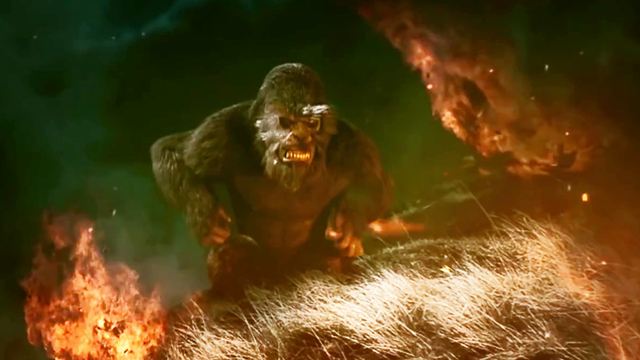
Everything you need to know about director Glenn Miller's Zoombies is delivered in the first ten minutes. There's an unopened zoo, some plucky kids on a zoology college internship, some earnest staff lead by Dr. Ellen Rogers (Kim Nielson), a man in a gorilla suit and some unknown highly contagious inter-species zombie virus. Let hilarity commence. Not that it probably matters but there's no real attempt at making the outbreak coherent or logical; some monkeys are sick, one has seizure, goes into cardiac arrest is given some epinephrine or something and comes back to life (we know this as the heart monitor that was never on the monkey starts beeping) as a rabid homicidal little shit on the extreme offensive. It's to the point, visceral and entertaining, if for all the wrongs reasons. Things soon escalate, as is the zombie way, with the addition of five or so other monkeys released from their cages and also inexplicably infected; there's screaming, killing and copious quantities of awfully fake CG blood and before you can say Sharknado 5, zoo security respond to the alarm, break the carefully controlled quarantine and let the carnage spill out to the rest of the zoo.

The film ultimately becomes one of cat and mouse; or what-ever painfully awful CG or prosthetic zombie animal insanity all involved best thought should drive the next round of hiding, screaming and falling over, and an ever-decreasing number of exaggerated disparate ill-suited Jurassic Park-esque survivors. There is an attempt at a larger narrative; of saving the world by stopping virus from reaching the aviary but this just leads to more confusion and head scratching; as wouldn't there be native birds around the park? And also I thought for a moment there would be some deeper narrative with the trio of Dr. Ellen Rogers, her daughter Thea (La La Nestor) and Kifo the Cross River Gorilla comically performed by Ivan Djurovic and some possible cure or empathetic break-through but any and all notions here were quickly dropped. In many ways Zoombies once it got going played it remarkably safe and dare I say, especially in the second half a tad derivative. Always silly, but always a tad lazy and obvious.

As said, if I was to stop, dissect and critique the film in any coherent or meaningful way things would soon turn ugly. Each and every scene always had one moment that flied in the face of logic and reason, and there were so many jaw dropping moments of disruptive cohesion with one scene directly contradicting the one before, that it would be easy to dismiss the whole thing as insulting and farcical. Even the virus itself asks more questions than it answers; like why it should be able to so quickly and virulently transfer between such differing species, yet leave humans unaffected? As I say though, looking at the film this way is nothing but an exercise in frustration and futility, though maybe there's another.

Sure it's laughably bad, sure it has CG effects that make your eyes bleed and a story that falls apart as soon as you give it any thought, but you know what; throughout the film I increasingly found myself looking forward to the next comedy star-trek bridge fall or unbelievable zombie animal. Whether it was the hilarious glass tapping parrots, the preposterous gorilla, the CG elephant ride, or even the intern falling hundreds of feet to his large explosive death; Miller does manage to somehow tap into that so bad it's good experience that it's almost impossible not to find some enjoyment. Also the main actors do a commendable job, able to not only retain straight faces but actually make the audience believe in them and give a damn as they face down each increasingly absurd situation. Look, I'm never going to say Zoombies is a good film, nor one I'd even recommend, but as a throwaway frivolous extremely silly and self-deprecating beer fuelled party flick perhaps there's enough to warrant a look - 4/10.

Steven@WTD.

Friday, 5 August 2016

Daddy, I'm a Zombie 2: Dixie Saves the Day! (Mummy, I'm a Zombie / Dixie and the Zombie Rebellion) - review

2014 (Spain)


Contains mild spoilers.

I may not have been the target audience for the cutesy zombiefied animated coming of age drama Daddy, I'm a Zombie, what with its focus on girlfriends, boyfriends and the hardships of teen life at a time the world was moments away from total undead subjugation. But it was hard not to acknowledge the tight cohesive moral story, the imaginative but respectful adaptation of the zombie trope for children and the solid if not spectacular production. It was what it was, and as a rainy school holiday movie treat it satisfied my zombie urge and delighted the littlens, and you can see why they moved for a sequel.

Daddy, I'm a Zombie was a complete story; threads weren't left hanging, the moral message was delivered, the foes metaphorically and physically if one believes Dixie Grimm's (voiced in English by Kimberely Wharton) dream was real were vanquished and everything was left happy ever after. It was always going to be a hard task to fashion a second outing that provided the necessary fan service and call backs, as well as an original and coherent story so perhaps we shouldn't be too surprised Daddy, I'm a Zombie 2 (UK title) aka Mummy, I'm a Zombie (USA), aka Dixie and the Zombie Rebellion as it was titled everywhere else (trans. Dixie y la rebelión zombi) does indeed ultimately struggle.

Daddy, I'm a Zombie followed a simple formula. Dixie has an accident, enters a self-contained dream world, has an exciting quest, and in the process learns some things about herself; it's a successful, intelligent and effortless The Wizard of Oz retelling. But just because something works once doesn't mean it will again. From the start Daddy, I'm a Zombie 2 has that feeling of a film at odds with itself. A film that doesn't really know what it wants to be, content to stutter and trip its way through a convoluted and incoherent premise and story, through to thoroughly unsatisfying ending, that was probably as much a relief to all involved as it is the viewer. And that's the main crux. Daddy, I'm a Zombie 2 has that feel of a film everyone thought would easily fall together but which became increasingly strained and difficult to work with. It's like someone jotted down a rough story and a few ideas which all agreed would probably be good enough, then realising things weren't going so well kept hammering at it till what was left was an incongruent mess; utterly unidentifiable.

Dixie's accident is now a contrived emergency appendix operation and the anaesthetic her gateway back to the zombie-land, her story some convoluted lazy rehash of the first, of the evil Nebulosa (Karen McCarthy) and a quest to recharge the Azoth stone, and the moral message some missed opportunity to do with authenticity and superficiality. I say zombie-land; for some reason directors Ricardo Ramón and Beñat Beitia have decided to ditch the rich alien world instead opting for the real one, but allowing the zombies, skeletons, ghosts and ghoulies of the first free reign to move back and forth. They've also allowed Dixie to remain alive and human, disappointingly overlooking one of the delights of the first film; that shared journey with her slowly learning and accepting she was not only a zombie but probably dead. It's like the easy option was taken each and every time; and though if I'm being kind I can see what they may have been trying to achieve, the film loses much of its identity by not having the clear demarcation and by not exploring her subtle and nuanced struggle with mortality. I'll briefly mention a real zombie bite and infection, and an interesting escalation in the safe child friendly proceedings which could have had deeply exciting and curious connotations if explored, which again was squandered.

Now it would be very easy to brand Daddy, I'm a Zombie 2, a cheap cash-in; an effortless insipid direct to DVD production put together by committee with no real passion, but I do have to remember I'm not the target audience. Garnering the thoughts of my two willing co-conspirators didn't help its case though; the youngest providing neither a thumbs up or thumbs down and the eldest lampooning it for its insultingly inconsistent and simple plot. For a film about authenticity and having the courage to be honest, it's ironic too, that its biggest weakness was incorrectly diagnosing adherence to the formula as the franchises strength, rather than Dixie's real and identifiable personal and emotional journey, and thinking as long as it superficially forced this, all would be good. A real missed opportunity - 3/10.

Steven@WTD.

Monday, 1 August 2016

The Omega Man - review

1971 (USA)


Contains spoilers. 

In 1964 directors Ubaldo Ragona and Sidney Salkow brought us The Last Man on Earth and Vincent Price as Robert Neville, a broken lonely figure forced to deal with the mundane realities of existence and subsistence by day and the real threat of attack by night. Their adaptation Richard Matheson's I Am Legend wasn't without fault; preferring a rather more traditional action packed finale than the more nuanced origin of evil twist of the book and thus rather missing the point, but over-all I found it quite the poignant post-apocalyptic vision. It was also, with its slowing and dumbing down of Matheson's vampires, a rather important part of the cinematic zombie story, with Romero even citing its crucial influence. The 2007 Will Smith blockbuster I Am Legend further blurred the vampire and zombie lines and with its theatrically released ending perhaps even further missed the Legend point; but I unashamedly enjoyed it for the big budget action packed spectacular that it was. In between though there was this other adaptation, and the cover exalting Charlton 'from my cold dead hands' Heston's automatic weapon prowess I think best illustrates the direction I felt it ultimately took.

To be fair Heston paints a performance worthy of Vincent Price's legacy and taken in isolation from its peers director Boris Sagal, and writers John William Corrington and Joyce Corrington, have fashioned quite the accomplished post-apocalyptic yarn. Los Angeles is captured hauntingly empty and Heston is every bit depressed, bereaved, despairing and unhinged as a person would be having to deal with not just the mundanity of surviving during the days, the existential angst and ennui of existing in a world without purpose, but the very real threat to his life every night. The 'family'; the Omega Man's vampires present themselves as an interesting and subversive, if a little incoherent and comically pathetic adversary, and though the infected and new order Ruth, is replaced with Lisa and a gun toting group of disparate survivors, in quite the departure from the book, it does open the way for a traditional and entertaining, if safe, action oriented plot.

And that's primarily what The Omega Man is; a glorious post-apocalyptic promise that doesn't quite deliver. But one that also doesn't actually fail. If anything it's that post-apocalyptic film trap. Set up a destitute, lonely, introvert inspiring world with gorgeous expansive cinematography that leaves the skin tingling, add a struggling hero one can empathise with, then fumble around rather unsuccessfully struggling to maintain all the built-up atmosphere and ambience when it comes to actually doing something with it. Watching Heston stumble and bluster around the city is as funny as it is tragic. Clearly broken from his two year exile, his life now the permanent contradiction of retaining dignity and humanity in a world where there's no accountability or obligation to do so, is perfectly realised; and summed up beautifully with each new bitter and utterly helpless sardonic quip. Then enters the family, Lisa and her gang in a tidal wave of high speed action, explosions and the film becomes something else; that certain je ne sais quoi gone.

Whilst the zombie case could be made with The Last Man on Earth and I Am Legend with their ambiguous vampire and infection fusion; the nocturnal albino protagonists of The Omega Man despite their physical and psychological changes are a more difficult proposition to argue for. Clearly alive, clearly cognisant and clearly rational, does a radical change in world view, a clear over-night about-turn in how one perceives and interacts with reality constitute zombie-esque irrationality, delusion and surrender to a singular hunger? Not at all I'd argue. The theme of The Omega Man, and one it does assume correctly from Matheson's source, is the question as to whether it's the family that's delusional and dangerous, or as they posit actually Neville and the old order that's got it all wrong. A perfectly reasonable and congruent position is still a position even if it's different. A person banging their head and waking up with a different personality is still a person; even if they do now want to set you on fire.

The one thing I would add before dismissing the zombie case all together is perhaps the point that they are infected, and their final change does seem to coincide with loss of empathy, social intelligence and individuality. The family are also driven by a counter-culture dogma, and structured as a cult like with a zealot leader Jonathan Matthias (Anthony Zerbe) who enforces his new bastardised ideological stance with violence and an inability to compromise. Maybe they're not quite as free-willed in their new state of mind as they intimate? I'll leave it open save that though there's probably enough to argue they're not zombie in any classical sense but there is ambiguity, that zombie discussion in relation to cults, drugs, mental health, and any impairment of the neo cortex doesn't seem to be going away, and the film does come with enough heritage to deserve to be not ignored.

As said, taken for what it is, The Omega Man is a rootin' tootin' post-apocalyptic action film with much to admire. Whether tearing the streets or removing his shirt to single-handedly dominate both because of and despite of the fact, Heston provides the lines, the action and the presence to ensure each sequence and scene is a success. Under scrutiny it may not hold together, nor do justice to Matheson's legacy; why for instance, armed with semi-automatic weaponry and a whole city of devices, technology and information can Neville not deal with a foe who want to tackle the situation as if in the Stone Age? But as said, looked at as an albeit of its time fun, action sci-fi, it holds up well with a coherent and interesting story, solid film making and decent effects. It also should be commended for one of cinemas first interracial romances. So, not really zombies and not the best I Am Legend adaptation it's still worth watching if for Heston alone - 6/10.

Steven@WTD.